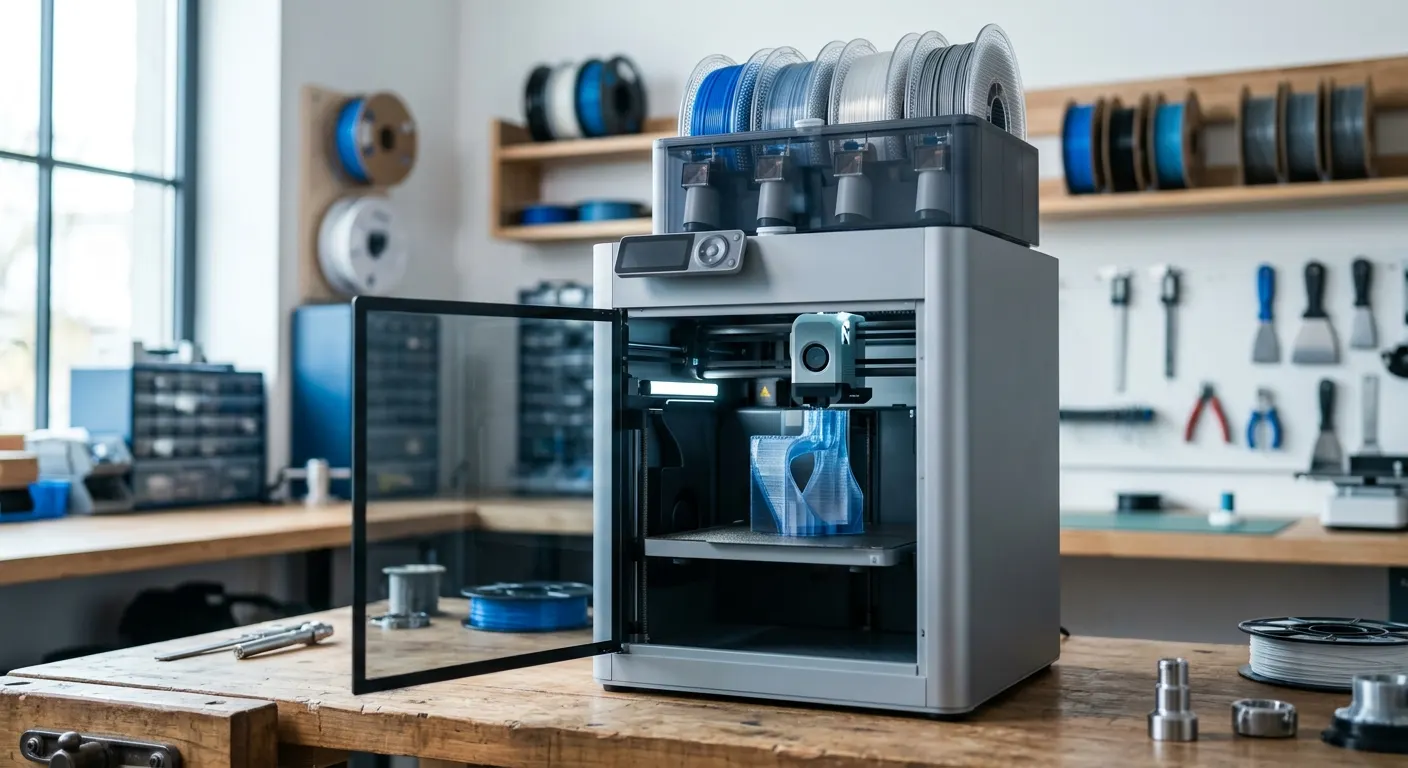
PETG is the material where build plate choice most directly determines whether a print session ends with a clean release or a damaged plate. The same PEI surface that grips PLA gently and releases it cleanly can bond PETG so aggressively at its higher bed temperatures that removing the print tears chunks of coating off the plate. The problem is over-adhesion, not poor adhesion, which is the opposite of what most material guides warn about. This guide covers which build surfaces release PETG cleanly, how to prepare a plate so PETG comes off without damage, and the release-agent workflow that protects the surface.
Quick answer
Textured PEI is the right build plate for PETG. It grips firmly enough to hold the print but releases cleanly on cooling, avoiding the over-adhesion that tears coating off smooth PEI. The Bambu textured plate suits Bambu printers and the Wham Bam textured sheet suits open-market machines. On smooth PEI, apply Magigoo as a release layer.
This guide contains affiliate links. LayerGrade may earn a commission at no cost to you.
Why PETG over-adheres and damages smooth PEI
PETG prints at a higher bed temperature than PLA, typically 70 to 80 degrees Celsius, and at that temperature it bonds chemically to smooth PEI with far more force than PLA does. The bond can be strong enough that removing a cooled print delaminates the PEI coating, tearing material off the plate along with the print. This is the central PETG build-plate problem, and it is one of over-adhesion rather than the weak adhesion most filament guides address.
The mechanism is why glass and bare smooth PEI are poor choices for regular PETG printing. They grip PETG so well that each print risks surface damage on removal. Letting the plate cool fully before flexing helps, PETG releases best at room temperature, but on a smooth surface the bond can still be aggressive enough to lift coating even when fully cooled.
The solution comes in two forms: a surface that grips PETG firmly but releases it cleanly on cooling, or a release agent applied to a smooth surface to break the over-adhesion. The rest of this guide covers both, starting with the surface that solves the problem without any added prep.
Textured PEI: the right default surface for PETG
Textured PEI is the build surface that solves PETG over-adhesion by design. It grips PETG firmly enough to hold the print through cooling but releases it cleanly once the plate reaches room temperature, without the aggressive bond that smooth PEI forms. The micro-texture also imprints a matte finish on the first layer that conceals any adhesion artifacts, which is a cosmetic bonus for display pieces.
For Bambu Lab printers, the Bambu Lab Textured PEI Plate is the purpose-designed option and handles PETG without adhesion spray or glue on the validated Bambu bed-temperature profiles. It is the surface most Bambu users should run for everyday PETG and PLA, and at its modest price it is the lowest-cost meaningful upgrade in the ecosystem.
For Ender 3, Prusa, and other open-market printers, the Wham Bam PEI Spring Steel Sheet is available in a textured version and is the most durable third-party spring steel sheet for the job. The textured PEI coating holds up across hundreds of print cycles and the spring steel flex releases cooled PETG prints without tools. Both plates make textured PEI the straightforward PETG answer for the majority of users.
Smooth PEI plus a release agent: when you want a glossy bottom
Textured PEI imprints a matte finish, so users who want a smooth, glossy bottom surface on a PETG print need smooth PEI, which reintroduces the over-adhesion problem. The fix is a release agent applied as a thin barrier between the PETG and the PEI coating.
Magigoo 3D Printer Bed Adhesion Stick is the purpose-formulated answer. Applied as a thin layer on smooth PEI before a PETG print, it grips firmly while hot and releases easily once the bed cools below roughly 30 degrees Celsius, so the print comes off without lifting coating. Unlike hairspray or generic glue, Magigoo is engineered for the temperature and adhesion requirements of FDM printing, which makes its hot-grip cold-release behavior predictable on PETG specifically.
A budget smooth PEI sheet like the Energetic Smooth PEI Magnetic Sheet is a reasonable surface to run this workflow on, since the release agent does the work of preventing over-adhesion and the sheet itself is inexpensive enough to replace when its coating eventually wears. The combination gives PETG a glossy bottom finish without risking the plate on every removal.
Plate preparation and maintenance for clean PETG release
Whatever surface you choose, clean it with 99 percent isopropyl alcohol before every PETG print. Skin oils from handling the plate degrade first-layer adhesion immediately, and inconsistent first-layer grip on PETG can produce either lifted corners during printing or, paradoxically, uneven over-adhesion in the spots that did bond. A clean surface gives consistent, predictable release.
Let the plate cool fully before removing a PETG print. PETG releases best at room temperature, and flexing a textured spring steel sheet while it is still warm fights a bond that would let go on its own a few minutes later. Patience here is the simplest protection against coating damage.
Reapply Magigoo every few prints if you are running the smooth-PEI release workflow, and clean accumulated residue off the plate periodically. On textured PEI, expect a few hundred print cycles before the coating degrades enough to warrant a replacement sheet; the sign is adhesion that becomes inconsistent across the plate rather than failing all at once.
FAQ
Frequently asked questions
What build plate is best for PETG?+
Textured PEI. It grips PETG firmly enough to hold the print but releases it cleanly once the plate cools, avoiding the aggressive bond that smooth PEI forms at PETG bed temperatures. The Bambu textured plate suits Bambu printers and the Wham Bam textured sheet suits Ender 3 and Prusa machines. It also leaves a clean matte first layer with no glue required.
Why does PETG tear chunks out of my PEI plate?+
PETG bonds chemically to smooth PEI at its higher bed temperatures, around 70 to 80 degrees Celsius, strongly enough to delaminate the coating when you remove the print. Switch to textured PEI for lower but adequate grip, or apply a thin release layer of a purpose made adhesion product on smooth PEI. Always let the plate cool fully before flexing it, since PETG releases best at room temperature.
Can I print PETG on smooth PEI if I want a glossy bottom?+
Yes, but use a release agent to control over adhesion. Apply a thin layer of a purpose made product like Magigoo to smooth PEI before the print. It grips while hot and lets go once the bed cools, so the print releases without lifting coating, and you still get the smooth glossy bottom that textured PEI cannot produce. Reapply every few prints and clean residue periodically.