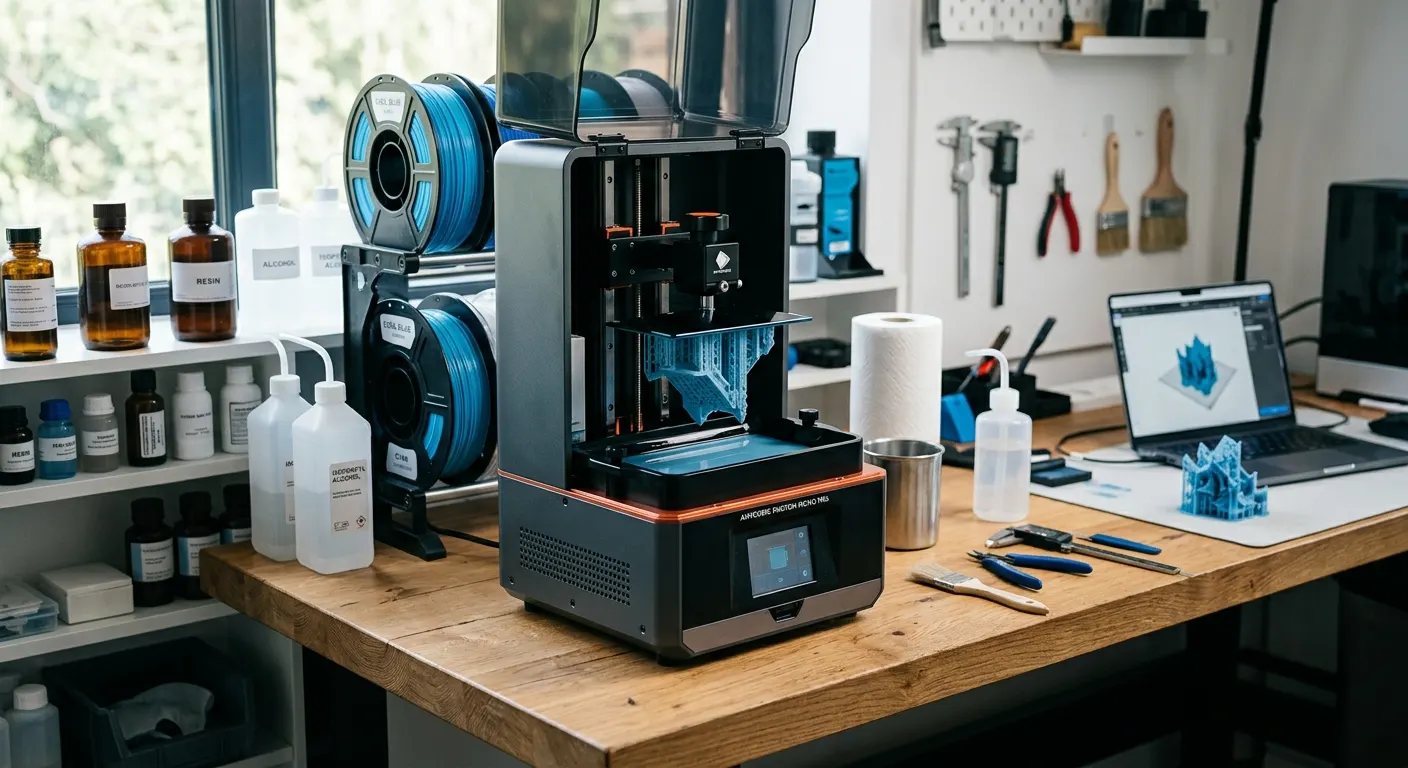
Resin 3D printing produces surface detail and resolution that FDM cannot match. The layer lines that are unavoidable in FDM printing are nearly invisible on a well-calibrated MSLA resin printer. Miniatures, jewelry masters, dental models, and precision mechanical prototypes are where resin earns its reputation. The trade-off is a more involved workflow: uncured resin requires safety precautions that FDM does not, and post-processing, washing and UV curing, is a necessary step between a finished print and a usable part. The accessories in this guide exist to make that workflow practical, safe, and repeatable.
Quick answer
Resin printing needs four things beyond the printer: nitrile gloves and ventilation for every session, since uncured resin is a skin sensitizer; a wash-and-cure station for consistent post-processing; spare FEP film inspected every 200 prints to prevent stuck prints; and a dedicated spare vat per resin color to skip cleaning between material changes.
This guide contains affiliate links. LayerGrade may earn a commission at no cost to you.
Safety first: gloves are not optional
Uncured photopolymer resin is a skin sensitizer. Repeated skin contact without protection does not immediately harm most users, but it builds a sensitization response that can result in allergic reactions triggered by even minor exposure. The allergic response, once developed, does not diminish. Prevention is the correct approach, not treatment.
Nitrile Exam Gloves (100-Count Box) are the mandatory first purchase for any resin printer setup. A 100-count box of powder-free nitrile exam gloves costs under $18 and provides enough coverage for many months of regular printing. Wear gloves during every resin handling operation: pouring resin into the vat, removing prints from the build plate, handling the vat, and any contact with IPA or wash solution containing dissolved resin.
Ventilation is the other safety requirement that cannot be negotiated. Resin fumes contain volatile organic compounds that irritate the respiratory system with prolonged exposure in enclosed spaces. Print in a ventilated room or with a dedicated exhaust fan directing air away from the operator. An enclosure with activated carbon filtration is the complete solution for users who print in shared living spaces.
Wash and cure: automating post-processing
Freshly printed resin parts are not ready to use. The surface contains uncured resin that must be washed away before UV curing hardens the part fully. The manual approach, IPA in a jar, UV nail lamp in a box, works but is messy, inconsistent, and time-consuming.
The ELEGOO Mercury Plus Wash and Cure Station automates both stages in a single unit sized for ELEGOO Mars series printers. The wash phase spins the print on a turntable in IPA or ELEGOO wash solution, removing surface resin evenly. The cure phase then rotates the part under a 405nm UV array, ensuring even light exposure on all surfaces without requiring the user to manually rotate the part.
For Anycubic Mono X and larger-format resin printers where the Mercury Plus basket is too small, the Anycubic Wash and Cure Plus provides an 8-liter wash capacity and dual 365nm plus 405nm UV wavelengths that cure a broader range of resin types. The dual wavelength coverage is relevant for engineering resins and specialty formulas that respond primarily to 365nm rather than the 405nm wavelength that most standard resins use.
After the first wash-and-cure session, the difference versus the manual approach is immediately apparent. Consistent curing produces parts with uniform hardness and surface quality. Manual curing with a nail lamp and manual rotation produces uneven results with soft spots on shadowed surfaces.
Resin selection: starting with the right material
For ELEGOO Mars and Saturn users beginning resin printing, ELEGOO Standard ABS-Like 3D Printing Resin is the correct starting material. It is the most documented resin in the ELEGOO community, with tested exposure profiles for every Mars and Saturn printer model available through community resources. Starting with a well-documented resin reduces the dialing-in process significantly.
For users who want to simplify post-processing cleanup, ELEGOO Water Washable Resin eliminates the need for IPA or dedicated wash solution. Water cleanup reduces chemistry costs and the ventilation requirements of IPA handling. Print quality is comparable to standard ABS-like resin. The trade-off is slightly lower post-cure hardness and toughness.
Both resins print at standard ELEGOO exposure settings for their respective printer models. Switching between them does not require exposure profile changes, they are drop-in alternatives for general printing. Water-washable resin does require thorough water washing and must not be washed into drain systems; collect the wash water and expose to sunlight or UV to cure the suspended resin before disposal.
FEP film: maintenance that prevents catastrophic failures
FEP film is the transparent release layer on the bottom of the resin vat that prints peel away from after each layer. It degrades with use, becoming cloudy and progressively less non-stick. A degraded FEP film is the most common cause of mid-print failures where the print adheres to the FEP rather than the build plate, resulting in a failed print and uncured resin in the vat that requires full cleaning.
ELEGOO FEP Film Replacement Sheet sheets pre-cut for Mars and Saturn printers are the maintenance consumable that prevents this failure mode. Inspect the FEP after every 200 prints or any print failure, visible clouding or scratches from a failed print removal indicate immediate replacement is needed. Keep two to three replacement sheets in stock so replacement happens on schedule rather than being delayed by shipping time.
Replacing FEP is a 20 to 30 minute process involving removing the vat, removing the old film, stretching and securing the new film with consistent tension across all fastening points, and verifying that no wrinkles or slack points exist in the installed film. Uneven tension causes print failures from inconsistent film flex during layer separation.
Vat management: spare vats for color and material separation
Active resin printers who switch between resin colors or formulations benefit significantly from maintaining dedicated vats for each material. Switching resins in a shared vat requires thorough cleaning with IPA and a UV cure of the cleaned vat to neutralize residue, a 30 to 60 minute process that interrupts print sessions.
A ELEGOO Resin Vat Replacement spare vat assigned to a specific resin color or formula eliminates this workflow friction. Cap the dedicated vat with its lid between sessions, label it with the resin type and last fill date, and swap vats when changing materials. The spare vat cost is recovered in the first few months of material-switching sessions that no longer require full vat cleaning.
When storing a filled or partially filled vat, keep it covered and away from any UV light source including indirect sunlight through windows. Uncured resin in an exposed vat will cure and polymerize into a solid mass that is difficult and expensive to remove.
FAQ
Frequently asked questions
What safety equipment is mandatory for resin printing?+
Nitrile gloves and ventilation, every session, no exceptions. Uncured resin is a skin sensitizer, and repeated exposure can trigger an allergic response that does not fade once developed. Wear powder free nitrile gloves for all handling, and print in a ventilated room or with an exhaust fan. Safety glasses and carbon filtration are worthwhile in shared living spaces.
Do I really need a wash and cure station?+
It is not required, but it makes results consistent and the workflow far cleaner. Fresh prints carry uncured resin that must be washed off, then UV cured to fully harden. A manual alcohol jar and UV lamp work but produce uneven curing with soft spots on shadowed areas. A station spins and rotates parts for even cleaning and curing on every surface.
How often should I replace the FEP film in my vat?+
Inspect it after about every 200 prints or any failed print, and replace when it looks cloudy, scratched, or loses its non stick feel. Degraded FEP is the top cause of prints sticking to the vat instead of the build plate. Keep two or three spare sheets on hand so replacement stays on schedule instead of waiting on shipping.